
Sovereign Intelligence

The Sovereign Builder Blog

Your business runs on you. It shouldn't. Field notes on the Founder Transformation Journey — naming the founder-dependency trap, then building the Executive Architecture that lets a company run without you: the F5 Freedom Framework, the systems, the execution layer.

FOUNDER DELEGATION·October 19, 2026·5 min read

The Founder's Fingerprint Audit: The Standards You Never Wrote Down

Every time you edit a team member's work, you enforce a standard that lives only in your head. The Founder's Fingerprint Audit is a one-week method for capturing those standards and writing them into your architecture.

Read the article →


FOUNDER-FRAMEWORKS·October 18, 2026·5 min read

The Founder's Vocabulary Audit: Turn Private Language Into Organizational Architecture

Your team nods along to your shorthand and then guesses. The Founder's Vocabulary Audit finds every undefined term you rely on — and encodes it into a lexicon your organization can execute against.

FOUNDER FRAMEWORKS·October 18, 2026·5 min read

The Founder's Signature Audit: Find the Decisions That Still Need Your Name

Your company depends on you because a specific set of decisions was never assigned an owner — not because your team is weak. Here's a five-step audit that finds those decisions in writing you already sent, and encodes them.

FOUNDER-DEPENDENCY·October 17, 2026·5 min read

The Founder's Handwriting Audit: How to Find the Standards Living Only in Your Head

Your team reproduces your emails but not your reasoning. The Founder's Handwriting Audit is a five-step method for turning the rules hidden in your own work into explicit, self-serve standards.

ONBOARDING·October 17, 2026·5 min read

The Onboarding Autopsy: What Your Last Three Hires Reveal About Where Your Business Still Needs You

Every question a new hire asks in their first thirty days is a piece of architecture that doesn't exist yet. The Onboarding Autopsy is a five-step method for turning those questions into encoded context, decision rights, and self-serve resources — so the next person you hire onboards into a system instead of into you.

FOUNDER-LEADERSHIP·October 16, 2026·6 min read

The Org Chart of Excuses: What Your Team Is Really Saying When Work Stalls

The excuses your team repeats aren't attitude problems — they're an X-ray of your missing architecture. Map every stalled phrase to the decision right, standard, or context source that retires it for good.

CALENDAR AUDIT·October 16, 2026·5 min read

The Shadow Calendar Audit: Your Real Org Chart Is in Your Calendar

Your org chart shows what you declared. Your calendar shows where judgment actually lives. The Shadow Calendar Audit turns 30 days of meetings into a dependency map — and a build plan for moving that judgment into your organization.

DECISION-RIGHTS·October 15, 2026·5 min read

Your Inbox Is Your Org Chart — And It's Time to Redraw It

Every thread that asks 'can you approve this?' is a decision with no encoded owner. The 30-Day Decision Audit shows you exactly which decisions still route through you — and how to assign them a real owner.

FOUNDER-DEPENDENCY·October 15, 2026·5 min read

The Vacation Autopsy: What Your Business Reveals While You're Gone

You came back from a real absence and found three piles: what ran fine, what silently waited, and what got handled in a way that broke a standard only you knew. That's not a vacation problem — it's a map of your dependencies.

FOUNDER-DEPENDENCE·October 14, 2026·5 min read

The Decision Inheritance Problem: Why Your Business Won't Survive You

When a founder leaves or sells, the buyer inherits the business but not the judgment that ran it. Here's how to encode your decision logic into architecture before the handoff happens.

FOUNDER DEPENDENCY·October 14, 2026·5 min read

Your Key-Person Policy Covers Your Death. It Doesn't Cover Your Absence.

Most founders insure the version of losing themselves that pays out a claim — and leave the far more likely version completely uncovered. Here's how to calculate your dependency liability and what it takes to make the business insurable against your absence, not just your death.

FOUNDER-LEVERAGE·October 13, 2026·5 min read

The Two-Week Notice Test: Could Your Business Survive Without You?

Most founders test whether the business would survive if they quit. The harder test is whether the business could give you two weeks' notice. Here is the architecture that makes it possible.

FOUNDER DEPENDENCY·October 13, 2026·5 min read

The 'I'll Just Do It Myself' Loop: How Founders Quietly Build Their Own Bottleneck

Taking a task back because explaining it is slower feels like efficiency. It is actually the mechanism that keeps your organization dependent on you. Here is the loop, the real cost, and how to break it in 14 days.

FOUNDER-DEPENDENCY·October 12, 2026·5 min read

The Exit Interview You'll Never Get: Run a 5-Day Absence Simulation on Your Own Business

No one will ever sit you down and tell you what your company really thinks of you. So the business gives you the interview instead — in the week you stop showing up. Here's the five-day absence simulation that turns that verdict into architecture.

FOUNDER DEPENDENCY·October 5, 2026·5 min read

The Founder Memory Tax: The Hidden Cost of Being Your Company's Only Database

Every question your team asks you is a decision your business never learned how to store. The Founder Memory Tax charges rent by the hour — and it compounds until the answers get encoded.

FOUNDER-DEPENDENCY·October 3, 2026·4 min read

The Consent Bottleneck: Why Your Team Still Can't Decide Without You

You handed out authority but kept the judgment. That's the Consent Bottleneck — and it's why every decision in your company still terminates in your inbox, even the ones you thought you delegated.

FOUNDER-DEPENDENCY·October 3, 2026·6 min read

Build the Founder First: Why the Bottleneck Was Never the Business

Most founders build the organization first and wonder why it collapses. The first floor isn't the business — it's you. Intelligence, Executive, Architect, in that order.

FUNDRAISING·September 25, 2026·5 min read

The Key-Man Discount: What Investors Price Before They Price Your Business

Investors don't discount founder-dependent businesses at exit — they discount them at the fundraising table. This is the Key-Man Discount, why it shows up in your term sheet, and the architecture that answers it before you raise.

FOUNDER DEPENDENCY·September 24, 2026·4 min read

Architecture in a Day: How to Map Founder Dependency in One Structured Session

One structured day is enough to see what your company depends on. The One-Day Architecture Sequence turns founder dependency from a feeling into a ranked, workable map.

DELEGATION·September 24, 2026·5 min read

The VA Revolving Door: Why Delegation Without Architecture Always Fails

The VA was never the problem. Founders who hand off tasks without first encoding the judgment those tasks require don't get leverage — they get a dependency relay. Here's the fix.

FOUNDER DEPENDENCY·September 23, 2026·5 min read

The Number Two Inversion: Why Your COO Hire Quietly Reverses on You

You hired a number two to take the business off your shoulders. Within a quarter, you're more embedded in operations than before the hire. That's the Number Two Inversion — and it isn't a hiring problem.

FOUNDER LEADERSHIP·September 23, 2026·4 min read

The Coaching Transfer Gap: Why Insight Never Reaches Your Operating Layer

You paid the retainer, did the sessions, filled out the worksheets — and the business still runs exactly the way it did before. Here's the real reason insight doesn't stick, and where it has to land instead.

FRACTIONAL-EXECUTIVE·September 22, 2026·5 min read

The Fractional Executive Failure Pattern: Why You Hired an Archaeologist Instead of a Multiplier

Fractional executives rarely fail because they lack capability. They fail because they arrive to multiply a system that was never built — and spend their billable hours excavating context instead.

FOUNDER-DEPENDENCY·September 22, 2026·5 min read

One Decision Away: The Framework for Removing Yourself as the Bottleneck

Most founders aren't one funnel away from scale — they're one decision away. Here is the four-step sequence that moves the judgment out of your head and into the organization, without losing control of the outcome.

FOUNDER DEPENDENCY·September 22, 2026·5 min read

The Transferability Discount: Why a Profitable Business Can Still Be Worth Less

Your business can be profitable and growing and still get priced below what it earns — because the discount isn't about revenue, it's about how much of the operation lives inside your head.

CHAOS TAX·September 21, 2026·5 min read

What's Your Chaos Tax? The Recurring Cost of Every Decision That Lives Only in Your Head

Every unarchitected decision has a price, and you pay it on a schedule. Here is the five-step Chaos Tax framework for finding your number — and retiring it.

SALES HANDOFF·September 21, 2026·5 min read

The Sales Handoff Illusion: Why Your Pipeline Broke When You Stepped Back

You didn't lose your closer — you lost the closing. When founders delegate sales without encoding their sales judgment, they build a team that performs the motions of selling without the intelligence that made those motions work.

REVENUE-DIVERSIFICATION·September 20, 2026·5 min read

The Revenue Diversification Trap: Why a Second Income Stream Multiplies Your Workload

Adding a second revenue stream feels like resilience. Without encoded operating architecture beneath it, it just routes every exception back to you. Here's how to tell which one you're building.

FOUNDER-DEPENDENCY·September 20, 2026·5 min read

The 90-Day Absence Test: What Actually Stops When the Founder Steps Away

If you disappeared for ninety days, what in your business actually stops? The 90-Day Absence Test is a four-move dependency audit you can run this afternoon — and the answer is the map of everything you still have to build.

FOUNDER-DEPENDENCY·September 20, 2026·5 min read

The Documentation Illusion: Why Your Playbook Didn't Make You Optional

A static SOP can hold instructions. It cannot hold judgment — which is why founders with a full wiki are still the bottleneck on every real decision. Here is the difference between recording what you do and encoding how you think.

FOUNDER-DEPENDENCY·September 19, 2026·5 min read

The Replication Ceiling: Why Your Business Can't Grow Past You

Your expansion didn't fail because the market was wrong. It failed because your operating model needed you in two places at once — and there is only one of you.

FOUNDER DEPENDENCY·September 19, 2026·5 min read

The Pause Problem: Your Business Survives Your Absence, But It Doesn't Operate In It

Your business didn't collapse while you were away. It just stopped. That's the Pause Problem — and it's the difference between an organization that survives you and one that actually advances without you.

FOUNDER-DEPENDENCE·September 18, 2026·5 min read

The Headcount Paradox: Why Every New Hire Makes You Busier First

Every hire adds to your workload before it lightens it — because onboarding, context transfer, and exceptions all route through you. Here's the architecture layer to build before the next one.

FUNDRAISING·September 17, 2026·4 min read

The Founder Credibility Ceiling: Why Investors Discount You When You're Right

You answered the investor's question about how the business runs without you, and the answer was true. Here's why a true answer still gets discounted — and what makes it verifiable.

FOUNDER-DEPENDENCY·September 17, 2026·5 min read

The Governance Vacuum: Why Great Advice Dies on Contact

Founders can want strategic input and still be unable to receive it. When the operating layer lives only in your head, even excellent advice has nothing to attach to.

FOUNDER DEPENDENCY·September 16, 2026·4 min read

The Unwriteable Job Description: Why You Can't Hire Your Way Out of Founder Dependency

Your hiring didn't fail because the market was thin. It failed because the role you were actually interviewing for was "be me" — and that description can't be written while your operating logic lives only in your head.

FOUNDER-DEPENDENCY·September 16, 2026·5 min read

The Partnership Readiness Gap: Why Great Operators Walk Away Right After You Describe Your Business

When a prospective partner asks how the business actually runs, "it runs through me" ends the conversation. The Partnership Readiness Gap is why equity deals die — and the architecture that closes it.

ADVISORY-RESIDUE·September 15, 2026·4 min read

The Advisory Residue Problem: Why Good Advice Never Becomes Capability

You paid for expertise and received a deck. The Advisory Residue Problem explains why outside advice so rarely becomes something your business can run on — and what has to be true for intelligence to stay in the org.

FOUNDER-DEPENDENCY·September 14, 2026·4 min read

The Key Person Trap: Why Founder-Plus-One Is One Resignation Away From Collapse

Your GM, ops lead, or right hand isn't a system — they're the translation layer between your head and your team's execution. Key Person Concentration Risk is the dependency most founders only see the moment it walks out the door.

ACQUIRABILITY·September 14, 2026·4 min read

The Acquirability Gap: Why Your Business Isn't Sellable Yet

A buyer doesn't walk away because your revenue is weak. They walk away because the business can't run without you. That distance between what you earn and what you own is the Acquirability Gap.

FOUNDER-ARCHITECTURE·September 13, 2026·5 min read

The Operator Onboarding Trap: Why Your New COO Can't Run a Business That Only Exists in Your Head

Senior hires rarely fail because they can't execute. They fail because there's no architecture to inherit — just a founder narrating decisions in real time. Here's how to build the system before you make the hire.

FOUNDER ARCHITECTURE·September 13, 2026·5 min read

You Have a Revenue Plan. What You Don't Have Is an Architecture Plan.

Founders plan hiring, revenue, and product — then wonder why delegation never holds. The missing document is an architecture plan, and it follows a specific five-step sequence. Here is the sequence, and the 14-day trial built to make you ship it.

FOUNDER-DEPENDENCY·September 12, 2026·4 min read

The Founder Horizon Fallacy: Why Your Business Won't Run Itself at the Next Milestone

Most founders are waiting for a number — revenue, headcount, a calmer quarter — to buy their freedom. The number isn't the problem. The missing architecture is.

FOUNDER-DEPENDENCY·September 11, 2026·6 min read

The Founder Is the Operating System: How to Stop Being the Processor

In a founder-dependent business, you're not the visionary above the machine — you are the machine. Here's the five-step Founder OS Extraction Framework for encoding your judgment into architecture that runs without you as the processor.

DOCUMENTATION·September 11, 2026·5 min read

You Didn't Fail at Documentation. You Documented the Wrong Layer.

You didn't fail at documentation — you documented outputs instead of decision architecture. Here's the difference between writing instructions for your team and encoding the reasoning layer underneath them.

FOUNDER-DEPENDENCY·September 10, 2026·4 min read

The Vacation Test: Why Your Business Breaks the Moment You Go Offline

Most founders plan time away from the business the way they plan a vacation: brief the team, set the out-of-office, and hope. Hope isn't a handoff — it's a stress test with no infrastructure behind it. Here's how to tell whether you have an operations problem or an architecture gap.

FOUNDER·September 10, 2026·5 min read

The Day One Founder Trap: Why Your Next Hire Isn't a Person

Most founders try to scale by hiring. The Day One Founder Trap is what happens when growth adds headcount but never adds infrastructure — and one person keeps holding all the context.

EXIUSS·September 9, 2026·3 min read

EXIUSS Code Ep. 01: Before You Build Your Organization, You Have to Build Yourself

Before You Build Your Organization, You Have to Build Yourself

ABOUT·September 9, 2026·3 min read

What Is EXIUSS?

EXIUSS is Executive Intelligence. Unified Strategy System — built on the F5 Freedom Framework, it diagnoses founder dependency and runs the execution layer so the business no longer needs you as its bottleneck.

FOUNDER DEPENDENCY·September 9, 2026·5 min read

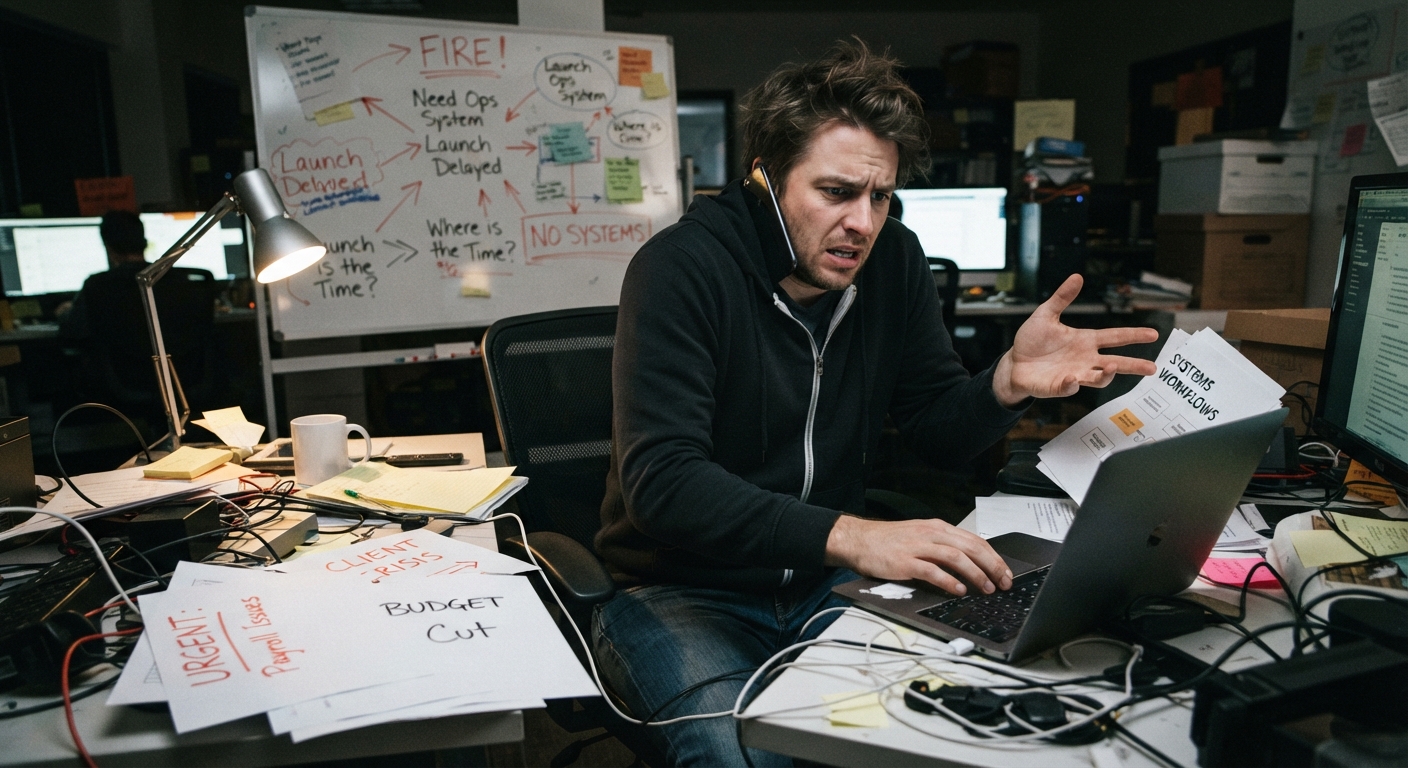
The Founder Firefight: Why You Never Get to Systems Work (And What It’s Costing You)

Most founders spend their weeks fighting fires and never touch the systems work that would actually free them. Here’s the real cost—and the way out.

FOUNDER DEPENDENCY·September 7, 2026·4 min read

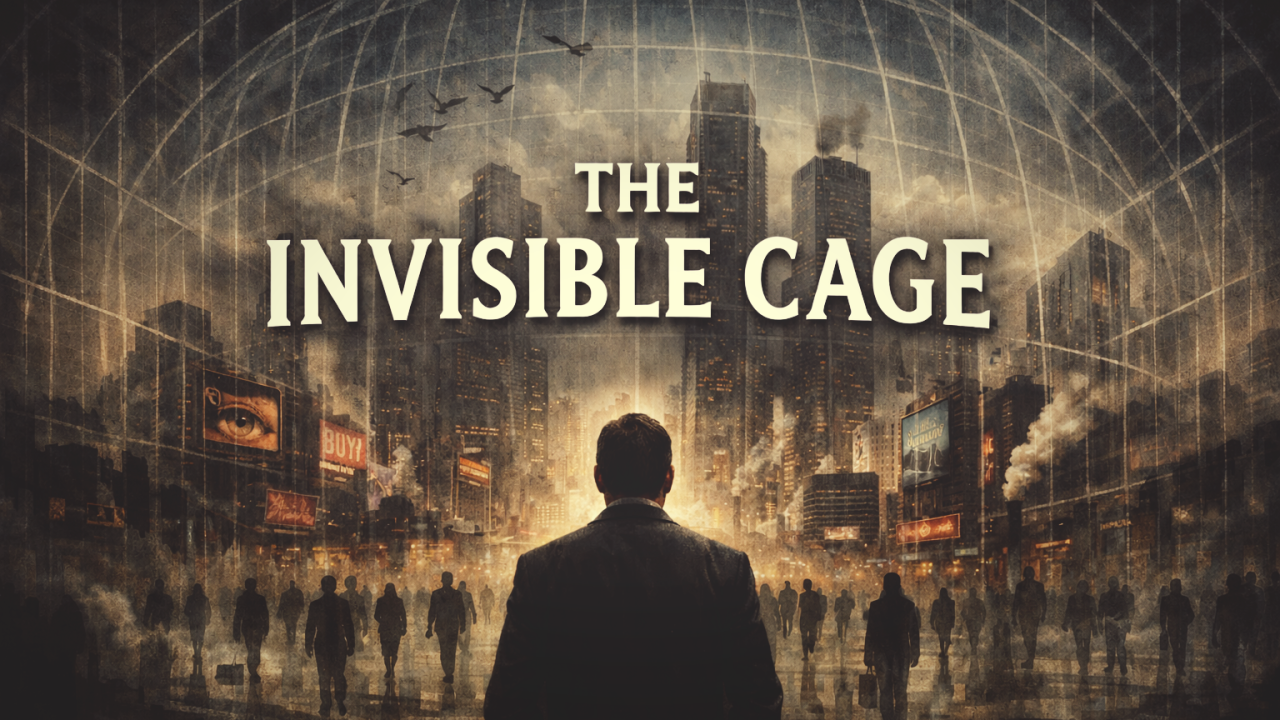
EXIUSS Code Ep. 02: You Built the Business Around Yourself. Here's How to Get Out.

Most founders don't have a business problem — they have a founder problem. The path out runs through three steps: see the cage, measure the cost, design the blueprint.

The field notes

One email a week. The sharpest operating insight from the desk.

New writing, new podcast episodes, and the one thing worth doing this week to get less dependent on yourself.

Your business runs on you. It shouldn't.

14 days of full access to the operational system of Executive Architecture — Guided Journey, Command Center, and your own Sovereign Dashboard.

Start EXIUSS Trial →